Lithuanian Cheese Traditions: Simple Foods with Deep Roots

How does a cheese tradition begin?
For us at Andrulis, the story of Lithuanian cheese began long before our business existed. The roots of Andrulis Farmers Cheese came from Lithuania with our grandparents. Like many immigrant families, they carried more than belongings across the ocean. They carried food traditions.
Those traditions mattered because they represented home. The familiar taste of fresh farmers cheese was something families could recreate anywhere as long as they had milk, time, and a simple recipe.
But where did those traditions begin? To understand that, let’s look at how fresh cheese became such an important part of Lithuanian cooking.
Dairy at the Center of Lithuanian Cooking
To understand Lithuanian cheese traditions, it helps to look at the history of Lithuanian farming and the environment that shaped it.
Lithuania has long winters and relatively short growing seasons. While grains and vegetables were important crops, farming families could not always rely on them alone for consistent nutrition. Raising animals became one of the most reliable ways to provide food throughout the year.
Cows were especially valuable on Lithuanian farms. A single animal could provide milk every day, which meant a steady source of protein and nutrients for the household.
Milk also had another advantage: it could be transformed into many different foods. Farmers could make butter, sour cream, and cheese, allowing them to preserve the nutritional value of milk for longer periods.
Because fresh milk was available regularly, Lithuanian households often processed it soon after milking. Instead of focusing on long-aged cheeses, many farms produced simple fresh cheeses that could be eaten within a few days.
Over time, this practical approach shaped Lithuanian cheese traditions. Fresh cheeses became part of daily cooking, appearing in breakfasts, dumplings, baked dishes, and desserts.
Because dairy was available throughout the year, cheese naturally became a familiar ingredient in Lithuanian kitchens in every season.
Lithuanian Farmers Cheese
Among the dairy foods made in Lithuania, farmers cheese became one of the most recognizable.
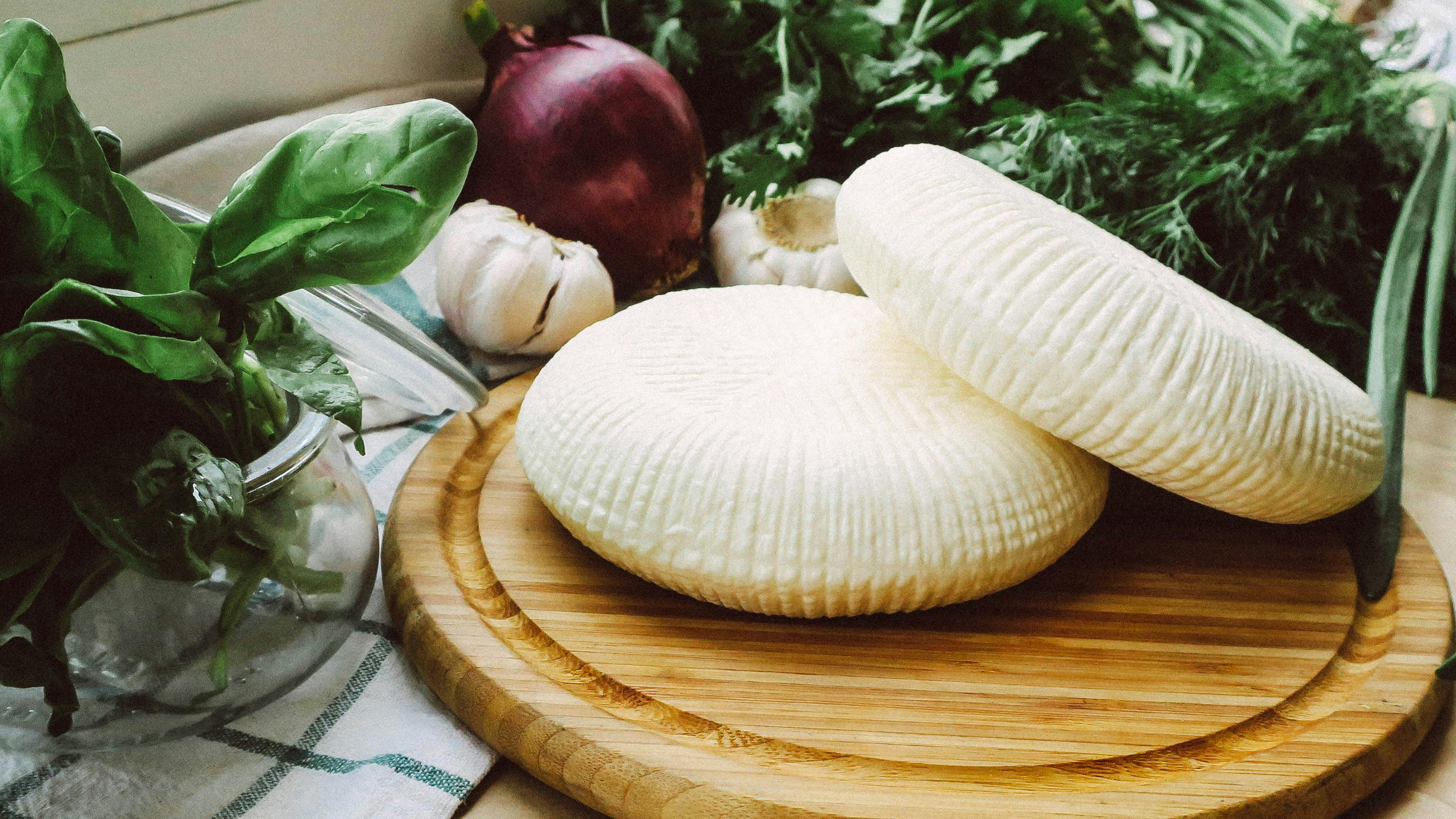
Farmers cheese is created by gently curdling milk and pressing the curds to remove excess whey. Unlike aged cheeses, it is not matured for long periods. The result is a cheese with a mild flavor and a crumbly yet soft texture.
What makes farmers cheese special is its simplicity. Instead of dominating a dish with strong flavor, it adapts easily to many types of cooking.
In Lithuanian kitchens, farmers cheese could be used in savory recipes with herbs and vegetables or in sweet dishes with fruit and sugar. That versatility made it a dependable ingredient for everyday meals.
Because of its mild taste and balanced texture, farmers cheese became one of the most widely used cheeses in traditional Lithuanian cooking.
Traditional Lithuanian Dishes with Cheese
As farmers cheese became a common household ingredient, it naturally found its way into many traditional Lithuanian recipes.
You can’t talk about Lithuanian cuisine without mentioning pierogies. These classic filled pastries appear in many family kitchens and are one of the most recognizable dishes across the region. When filled with farmers cheese, pierogies offer a soft, mild center that pairs beautifully with butter, sautéed onions, or sour cream. The simple flavor of the cheese makes it an ideal filling for this comforting dish.
If you want to learn more about pierogies, check out our blog about them.
Another well-known favorite is varškė pancakes. These soft pancakes combine fresh farmers cheese with eggs and flour to create a tender texture. They are usually served warm with sour cream, jam, or fresh berries, making them a comforting breakfast or dessert enjoyed in many Lithuanian homes.
Farmers cheese also appears in hearty main dishes. One famous example is cepelinai, Lithuania’s iconic potato dumplings. While many versions are filled with meat, some traditional preparations include farmers cheese as part of the filling or served alongside the dish with crispy bacon and sour cream. The rich flavor of pork combined with the mild freshness of the cheese creates a balanced and satisfying meal.
Even the simplest preparations reflect Lithuanian cooking traditions. Farmers cheese served with honey, fruit, or bread can become a complete and nourishing meal.
Together, these dishes show why a traditional farmer cheese recipe has remained popular for generations. The ingredient itself is simple, nutritious, and versatile enough to appear in both everyday meals and special family recipes.
How Lithuanian Cheese Traveled Around the World
Over time, Lithuanian food traditions began to travel far beyond Lithuania itself.
During different periods of the twentieth century, many Lithuanian families left their homeland in search of stability and opportunity. Economic challenges, political changes, and war led people to start new lives in other parts of the world.
But wherever they went, families brought their cooking traditions with them.
Our own story follows that path.
Four generations ago, the Andrulis family came to the United States and eventually settled in Michigan. The farmland and changing seasons reminded us of Lithuania, and it felt like a place where the traditions we carried could continue.
So we did what Lithuanian families had done for generations. We built a farm and continued making the Lithuanian farmers cheese we knew so well.
Over time, those traditions became the foundation of Andrulis Cheese. While technology and equipment have evolved, the heart of what we do remains the same: producing fresh farmers cheese inspired by Lithuanian recipes and family traditions.
Today, those traditions continue to grow. What once existed only on small farms can now reach people across the country. Through modern shipping and online stores, anyone can enjoy a cheese that carries both Lithuanian roots and a place in the larger story of Michigan cheese.