
Cheese + Love

Cheese + Love
Love has always shown itself in small, human ways. In traditions passed from one generation to the next. In gifts chosen with thought. In the care taken to make food for someone else. Long before holidays and formal celebrations, people used everyday meals to express attention and affection. Love does not require excess, but it does require care. What we give should be honest, dependable, and made with intention. Like quality farmers cheese.
Cheese History Has Always Been About Love
Cheese has long been tied to love. Not by metaphor, but by use. It is not accidental that the first known cheesecake was served at weddings. In Ancient Greece, as early as around 2000 BC, simple cakes made from fresh cheese, honey, and grain were prepared for marriage celebrations. These cheesecakes were offered to couples as part of the wedding feast, symbolizing nourishment, shared life, and the start of a household built together.
When the Romans adopted Greek culinary traditions, they carried this idea forward. Cheese-based cakes such as libum and savillum appeared in Roman celebrations and ceremonial gatherings. These were not everyday foods. They were made for moments that mattered, when people came together to mark union, continuity, and shared purpose. Cheese remained at the center because it required care, time, and skill – the same things a marriage was expected to demand. From the beginning, cheese was not just food. It was part of how love was celebrated, shared, and understood.
Cheese History Continues as a Love Language Today
Today, cheese + love culture exists all around the world. People talk about origin, texture, aging, and pairing. But beneath all of that, something older remains. A good cheese is still a way to say something without words. Chosen carefully, shared intentionally, cheese becomes a form of love language. Different cheeses speak differently.
Mozzarella
Mozzarella is about closeness. It is soft, fresh, and meant to be eaten soon. It stretches, blends, and belongs at the center of the table. In the language of love, mozzarella says comfort, familiarity, and everyday togetherness. It is chosen for shared meals, not grand gestures.
Brie
Brie speaks of tenderness. It is gentle, rounded, and inviting. It requires time and attention, not a rush. Brie in a love language means care, patience, and quiet intimacy. It is often offered when someone wants to create a calm moment rather than make a statement.
Parmesan
Parmesan represents commitment. It takes time to age and effort to produce. Its flavor is earned, not immediate. In love, parmesan means trust built over years, respect, and depth. It is not flashy, but it lasts.
Farmers Cheese
Farmers cheese speaks of honesty. It is straightforward, dependable, and made to be shared. It fits into daily life and special moments without changing its nature. In a love language, farmers cheese means care that shows up consistently. It says, “I made this with intention.”
Dessert Cheese
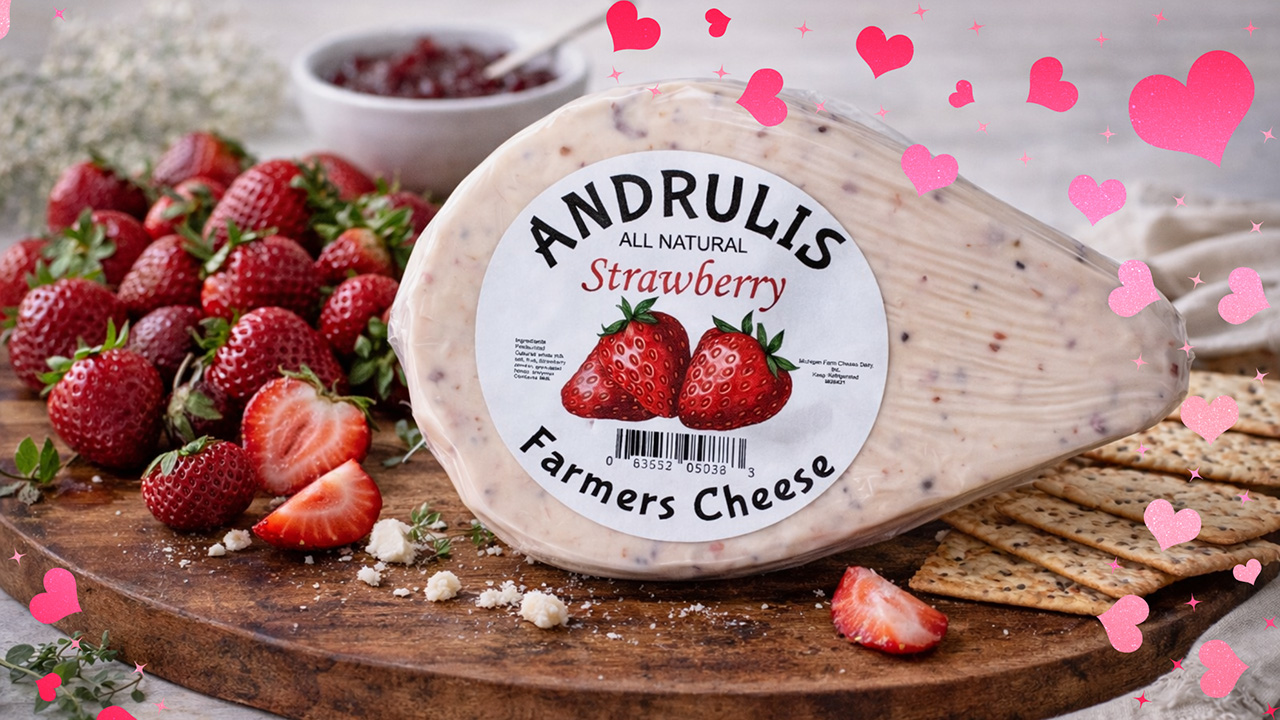
Sweet cheese is affection made visible. It appears in desserts, celebrations, and shared endings to meals, carrying warmth and generosity. In the language of love, sweet cheese expresses joy, softness, and care. When you think about dessert cheeses, combinations like strawberries and cheese sound like pure love.
What Andrulis Cheese Can Say to Your Loved One
Cheese is often shared before words are exchanged. With parents, children, friends, or a partner. You offer a flavor you know they like. You bring something familiar. People enjoy the cheese, and in that moment, they think of you. That is why a gift built around cheese + love carries meaning. Our Andrulis Gift Baskets, are filled with five packages of farmers cheese of your choice. It is not about the quantity but rather the attention to the choices and knowing that someone who enjoys it, choose it deliberately. Receiving a gift like that feels personal. It invites tasting, sharing, and quietly guessing the love language behind it
Option One: Sweet-Focused Selection
A basket built mostly around sweet cheeses speaks gently. Dessert Cheeses say care and warmth. They suggest comfort and closeness. They are often chosen for shared endings – dessert, quiet evenings, moments meant to slow down. In a love language, sweet cheese says, “I want to bring you joy,” without asking for anything in return. This kind of selection fits when affection is soft, familiar, and steady.
Option Two: Savory and Balanced Selection
A basket built around spiced cheeses, basil, and plain farmers cheese carries a different message. Spiced cheeses add curiosity and energy. Basil brings freshness and intention. Plain farmers cheese grounds everything, steady and reliable. Together, they speak of balance. Of knowing someone well enough to mix comfort with interest. In the language of love, this selection says, “I know who you are.” It reflects care that pays attention, not just to taste, but to personality. In the end, cheese does not need explanation. When chosen with intention, it becomes a message on its own.
Conclusion
From the earliest wedding cheesecakes to the cheeses shared at today’s tables, the role of cheese + love has stayed surprisingly consistent. It has always appeared where people gather with intention. Where food is chosen with care. Where something meaningful is meant to be shared. Across history, cheese marked love through nourishment and effort. In everyday life, it continues to do the same through familiarity and attention. Different cheeses carry different messages – softness, patience, commitment, comfort, joy.
Flavor becomes a way to speak when words feel unnecessary. That is why cheese remains a timeless gesture of love. Not because it is rare, but because it is chosen. Quality cheese reflects care, honesty, and intention. And those qualities, whether in history or today, remain at the center of how love is expressed.