Basil and Cheese, A Natural Pair

A Short History of Basil and Cheese Together
Basil has been used in cooking for thousands of years, especially around the Mediterranean. It was valued not only for flavor, but for its freshness and aroma. Cheese, made from milk that needed daily care, often shared the same kitchens and tables. Basil has a clean, green flavor with light peppery notes and a natural sweetness that appears when it is used fresh. It does not overwhelm. Instead, it sharpens and lifts what it touches. This makes it especially well suited to mild, fresh cheeses, where balance matters more than intensity.
When fresh herbs became part of everyday cooking, basil naturally found its place next to cheese. It added brightness to dairy flavors and brought clarity to dishes built on simple ingredients. Rather than covering the taste of the cheese, basil helped define it, allowing the milk itself to remain present. Over time, basil and cheese became linked through repetition, not design. Cooks returned to the pairing because it worked. Fresh basil supported the texture and character of quality cheese, making each element feel more complete without changing its nature.
Why Basil and Cheese Work So Well
As cooking traditions developed, certain pairings stayed because they solved simple problems in the kitchen. Basil and cheese is one of them. The pairing brings contrast while keeping balance, which is why it has appeared independently in different regions over time. In southern Italy, fresh cheeses like mozzarella and burrata became common between the 16th and 18th centuries, when buffalo and cow milk production increased in regions such as Campania and Puglia. These cheeses were soft, mild, and meant to be eaten fresh. Basil, growing easily in the same climate, provided aroma and freshness without masking the milk. The pairing formed naturally through availability and use, not through recipe design.
The same logic shaped dishes that later became familiar worldwide, such as simple salads built around fresh cheese, basil, olive oil, and vegetables. These combinations emerged from everyday cooking, where meals relied on a few ingredients chosen for balance rather than complexity. Each element played a clear role, and none needed heat or heavy processing to work. From a practical standpoint, basil suits cheese because it performs best when used fresh. Heat dulls its aroma, but fresh basil keeps its clarity. This matches cheeses that are pressed or set but not aged, where texture and moisture are part of the experience. In these cases, basil sharpens perception rather than changing structure.
This is why the pairing appears again and again in farmers cheese recipes across different food cultures. Basil lifts the dairy flavor while allowing the character of quality cheese to remain intact. The result feels complete without being heavy, and familiar without being plain. Basil and cheese work well together because they follow the same principle. Both rely on freshness. Both reward restraint. And both show their best qualities when they are allowed to stay simple.
Basil Beyond the Mediterranean
While basil is often associated with southern European cooking, it is not limited to one region. It grows best in temperate climates with warm summers, regular rainfall, and good soil – the same conditions that support dairy farming. Wherever fresh herbs and fresh cheese are part of daily life, basil eventually finds its way to the table.
In Lithuania, fresh cheeses have long played a central role in home cooking. Farmers Cheese was made regularly, eaten young, and paired with whatever was available at the time. Herbs were used seasonally, especially in warmer months, to bring freshness to dairy-based meals. While basil was not always the most common herb historically, the practice of combining fresh cheese with herbs was deeply familiar. The idea mattered more than the specific plant – freshness layered onto freshness.
When Lithuanian food traditions traveled, they adapted. They did not stay frozen in one place. They followed climate, farming conditions, and access to ingredients. That same adaptation continues in Michigan today. Michigan Farming supports both dairy production and herb cultivation. Basil grows well during the local growing season, often alongside vegetables and other herbs. It is accessible, aromatic, and best used fresh – exactly the qualities that suit farmers cheese.
This is where the connection becomes clear. Andrulis is tied to both places. The farmers cheese comes from a Lithuanian tradition. The basil comes from the reality of Michigan farming. It was just a matter of time before basil cheese would show up at the store.
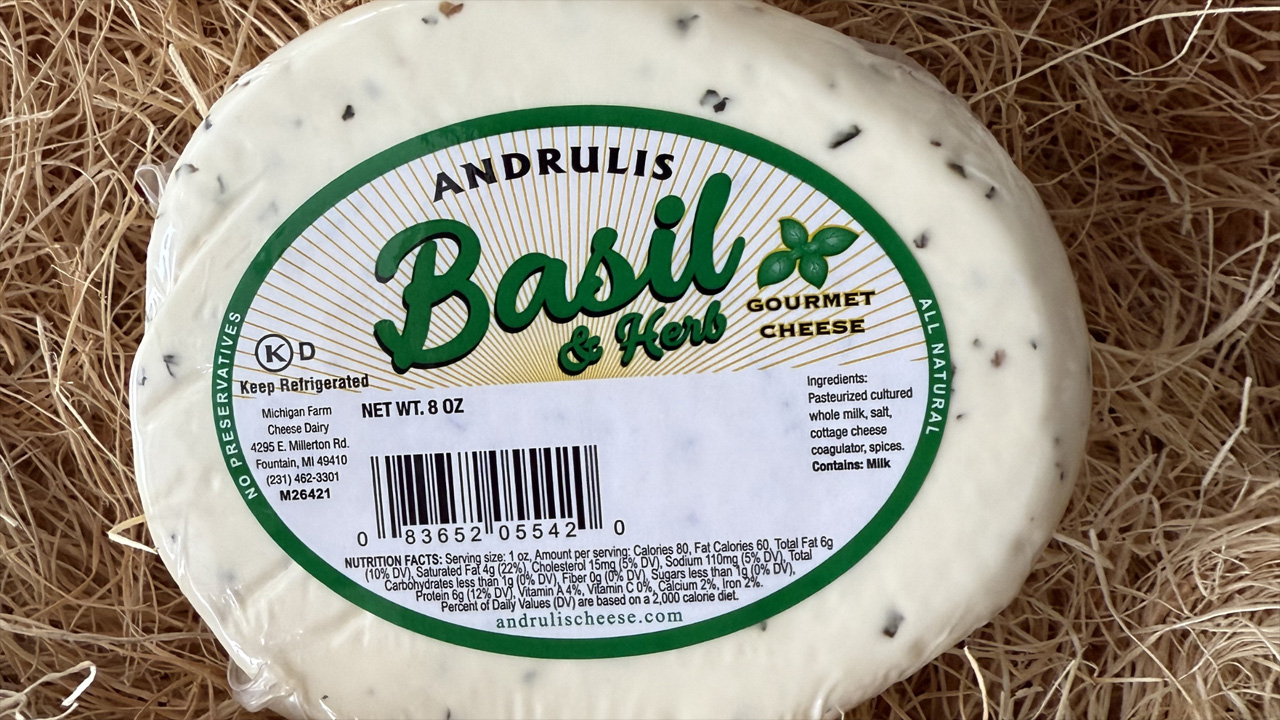
Basil ended up in Andrulis basil Farmers Cheese for a simple reason. It fits. It respects the structure of the cheese while adding something seasonal and fresh. It follows the same logic that has guided farmers cheese for generations – use what grows well, pair what makes sense, and let the ingredients speak without force. In that way, basil farmers cheese is not a departure from tradition. It is a continuation of it, shaped by where the cheese is made now, and how people cook and eat today.